Repacking our human remains collection
Jenny, our Curator of Archaeology, has been busy this month repacking our human remains collection with Dr Jess Thompson from National Museums Scotland in Edinburgh. We do not actively collect human remains at Shetland Museum and Archives, but we do have collections from previous excavations, which span from the Neolithic at Sumburgh cist to the Medieval period and later, such as St Ninian’s Isle.
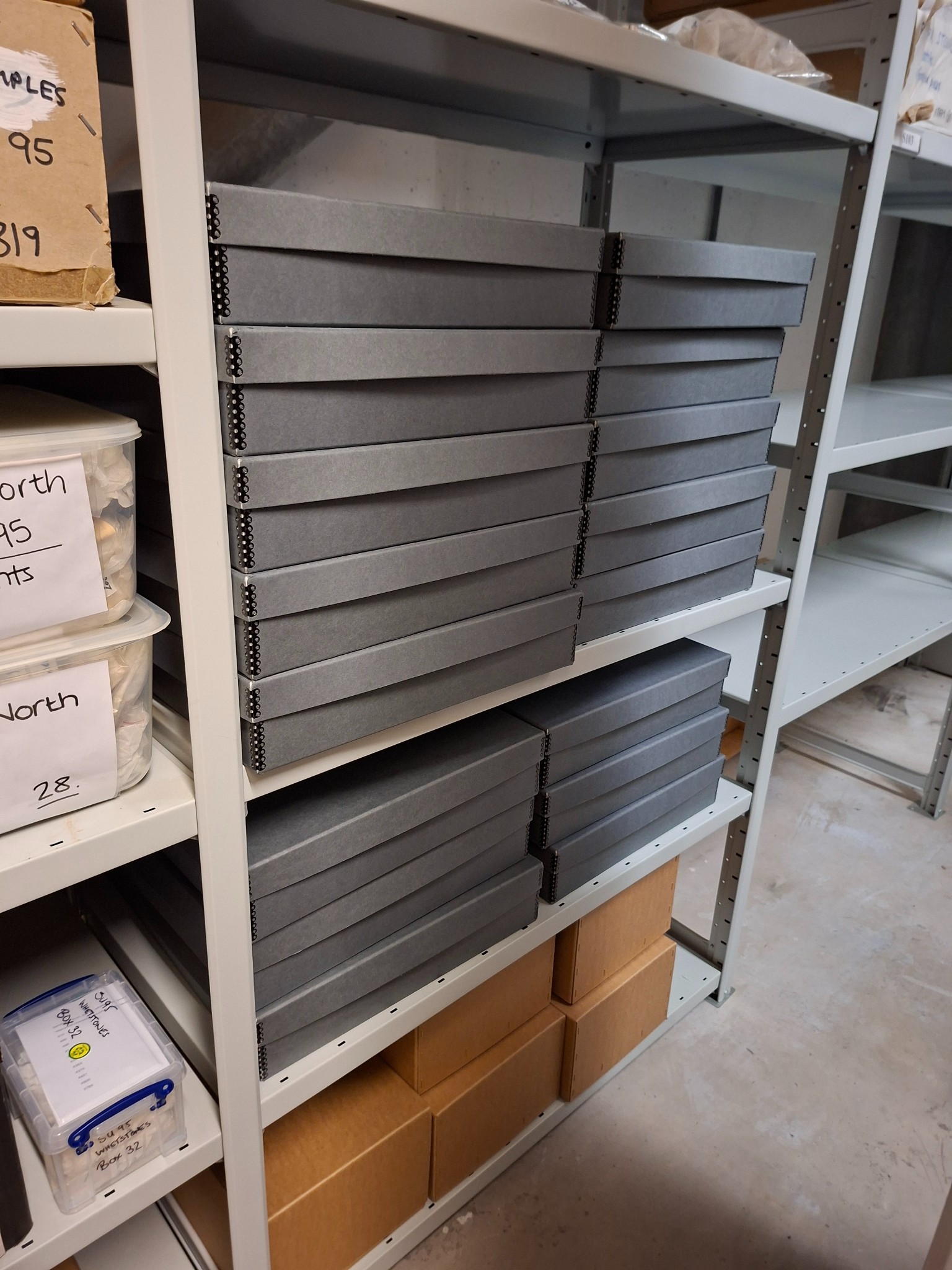
Jess is Curator of Osteoarchaeology at National Museums Scotland and works on Scotland’s Archaeological Human Remains Collections (SAHRC), a collaborative project led by National Museums Scotland with Historic Environment Scotland. She has been advising us on up-to-date best practice on how to care for our ancestors. Jess shared new information about the people in our collection, including evidence of pathology such as arthritis, which can be observed on the bone. We have learned a lot from her visit. The human remains in Shetland Museum’s care are now repacked and respectfully stored on new shelving.
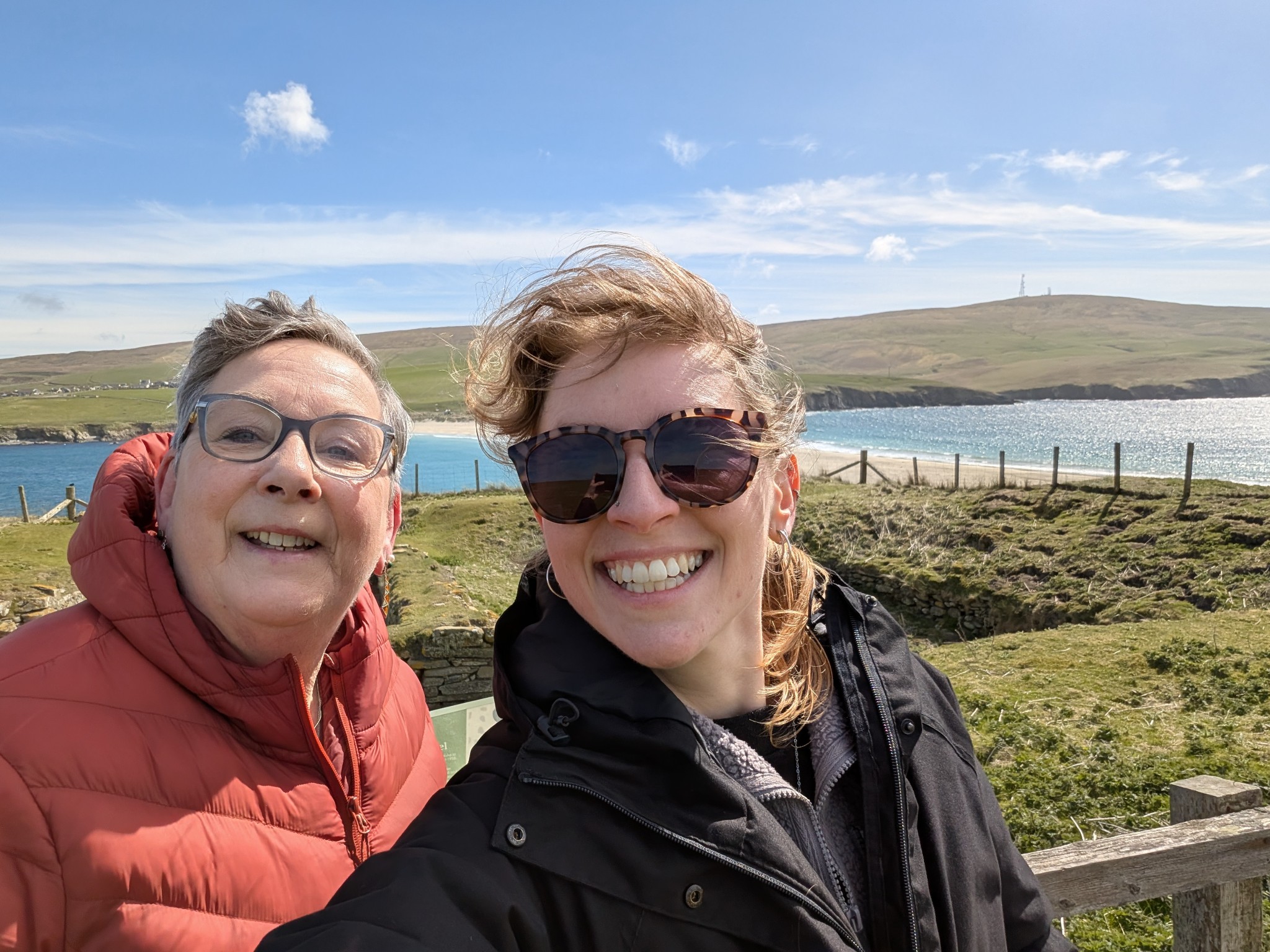
It was good to show Jess, on her way to the airport, where these people had come from with a couple of site visits on the way. She was excited to visit her first Iron Age broch with a fantastic tour at Old Scatness by our colleague Steve Jennings, and to see where some of the human remains from Jarlshof, which are cared for at the National Museums Collection Centre were found.
To find out more from the experts about what happens after human remains are excavated and how they are cared for in museum collections, see:
Why do museums in Scotland store human remains - Dig It
What happens when human remains are found in Scotland? - Dig It
This work was supported by the Arts and Humanities Research Council (AHRC), part of UK Research and Innovation (UKRI), through the Research Infrastructure for Conservation and Heritage Science (RICHeS) programme.