Cauld Wadder
So it’s been snowing. Temperatures below zero, minus two, or minus four. It depends on where you are, a little altitude matters at this latitude, and even locations a little inland can lower a temperature a bit. We have a maritime climate, temperatures are governed by the sea, and our one doesn’t freeze. Even so, wind chill can move our below zero temperatures down as far as a challenging minus ten and beyond. The trend over the past couple of decades has been for the minimum temperature to rise.
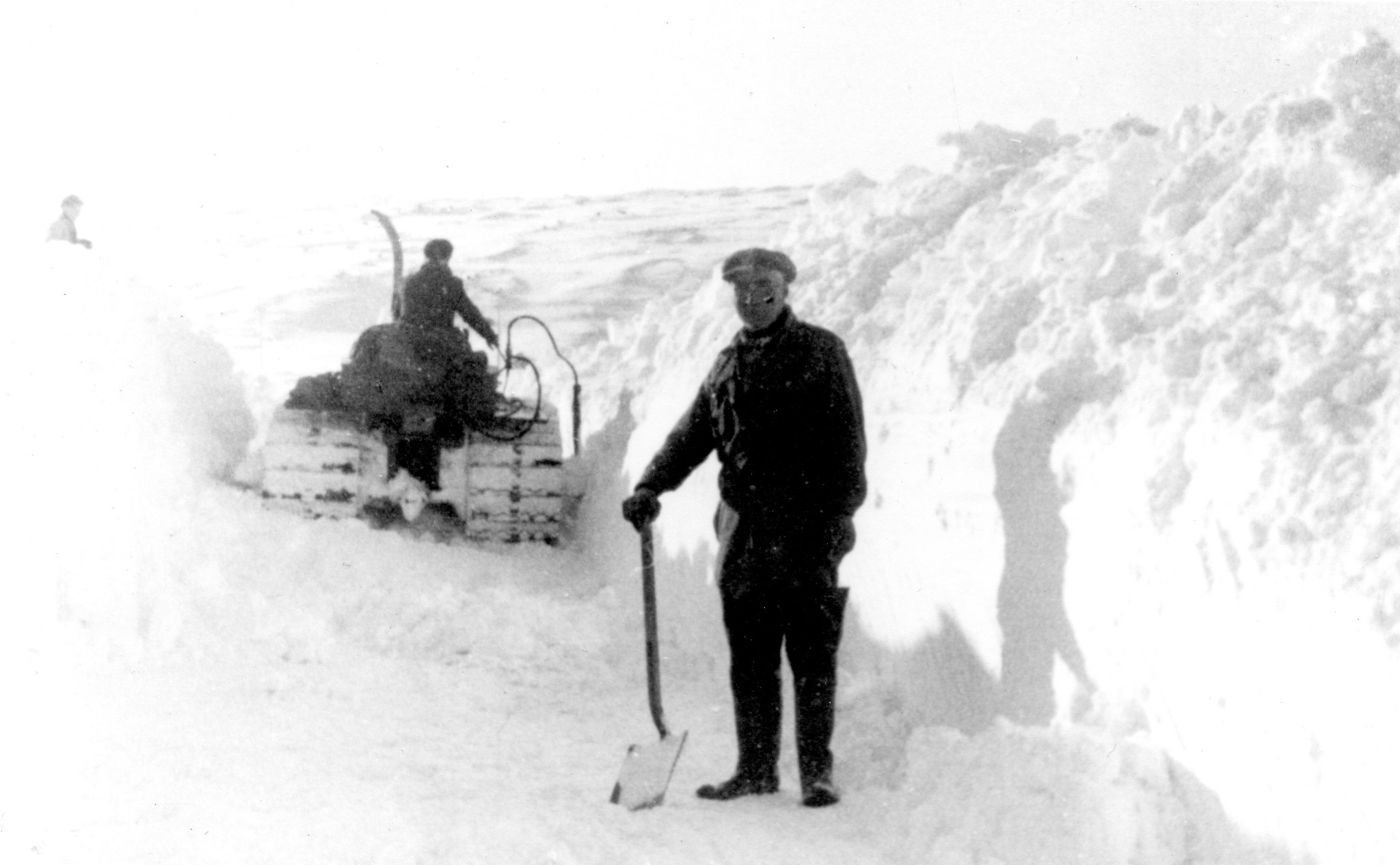
Photo above: Men digging out the road in snow, 1955 (04534)
What about past decades? The 1950s seem to have been a chilly decade, with twelve cases of minimum temperatures between minus 7.2 and minus 8.9. The latter our lowest ever recorded temperature. That was registered at the Lerwick Meteorological Station on 27 January 1952. In fact, five days from 26 January to 30 January had a minimum range from minus 5.6 to minus 8.9. Many a trip to the peat stack in that week, and many a wee china pig in a bed.
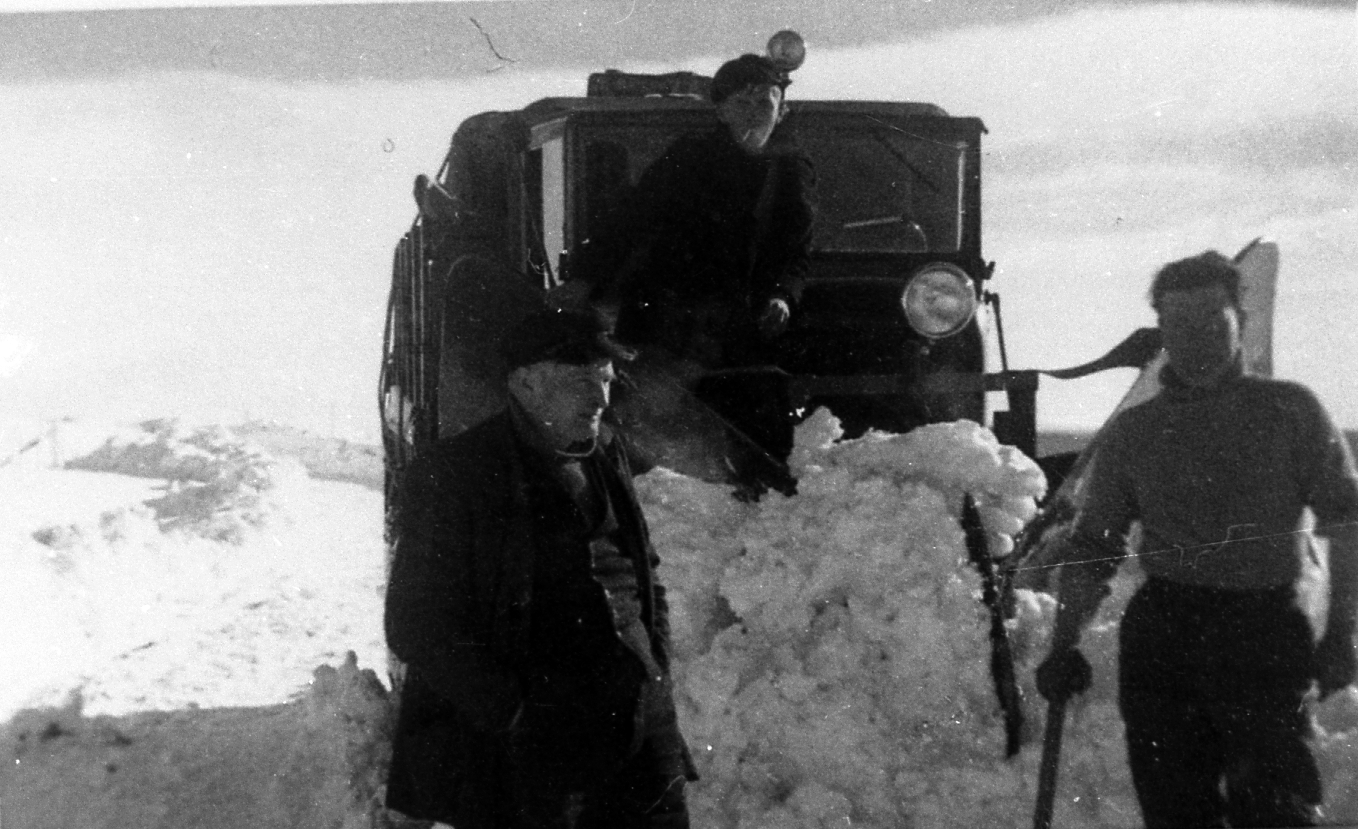
Photo above: Snow Plough 1955, Ex WD Mack in deep snow.
Left to right: Jeemie Hughson, John Arthur and Attie Smith (JM01018)
At the end of the decade, 23 January 1959 had minus 8.9 Celsius again. The Zetland County Council declared an emergency and deployed all the snow clearing equipment it could muster, the stars being a couple of large Mack vehicles. Even so, road transport largely failed over much of Shetland for a time. The lifeboat had to pick up Arthur Nicolson of Girlsta, who had broken a leg. The Brenda fishery cruiser had to go for William Nicolson of Skea, who had turned ill. He had to be rowed out to the vessel, and the Hillswick doctor had only been able to get to him by then via tractor. Dr Brooker in Yell approached problems there using his skis.
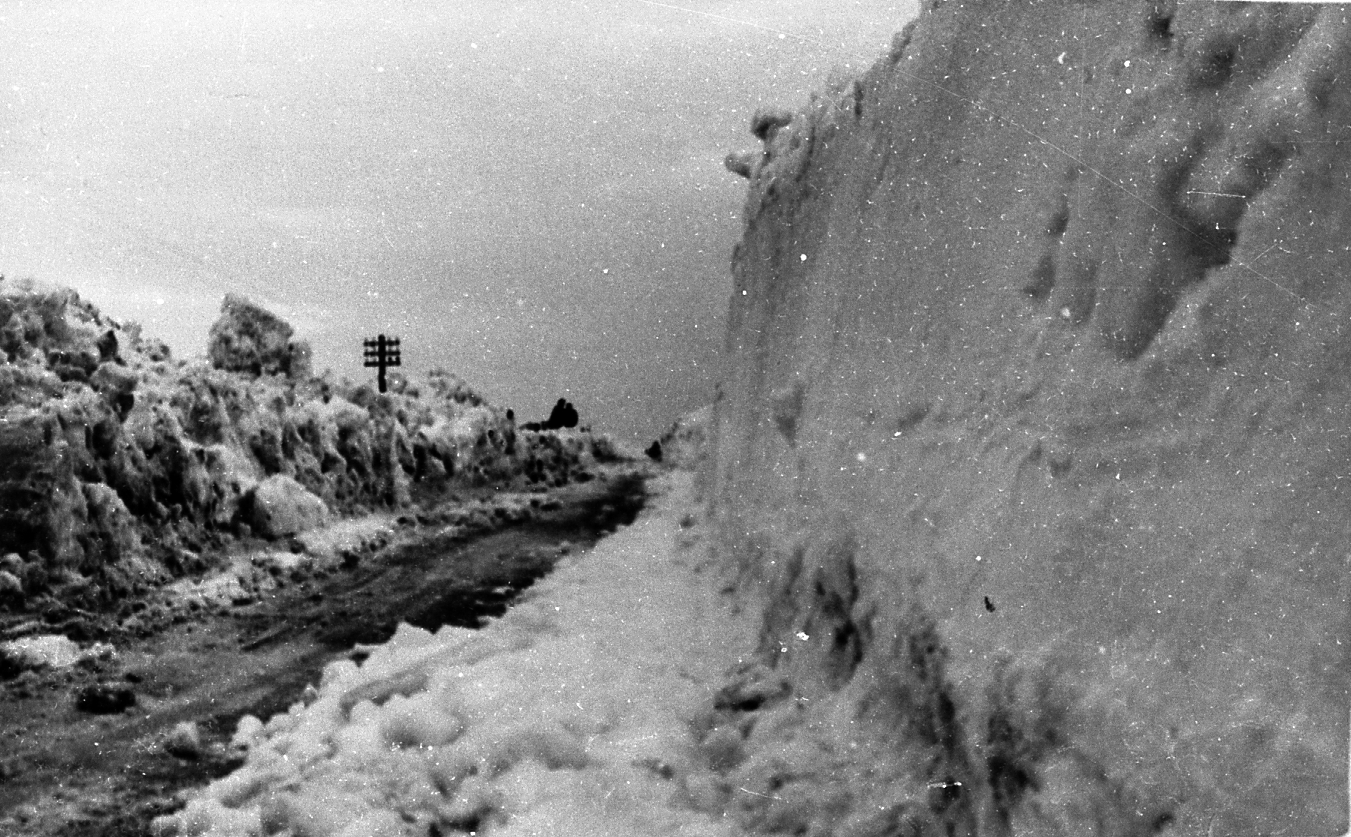
Photo above: Deep Snow (JM01511)
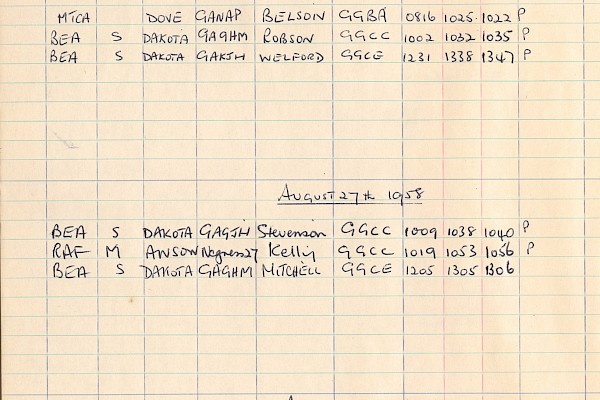
BEA passengers landed at Sumburgh at 1.30 but only made it into Lerwick by 8 in the evening, having got stuck above Gulberwick. Mitchell Georgeson’s baker’s van was stranded nearby, which probably helped. One bulldozer driver started clearing snow at seven in the morning, and carried on until four in the afternoon when he got some tea. Up Helly Aa on 27 January went ahead, since it doesn’t cancel for weather, the weather cancelled for it – a thaw came.
None of these record low temperatures occurred in the legendary Shetland winter of 1947, part of widespread period of cold weather across Europe, made more difficult by war-damaged infrastructure, food and energy shortages. The lowest temperatures in Shetland were on 13 and 14 March, close to the record temperatures at minus 8.3. 1947 had a long period of snowfall and low temperatures. A lot of people dug themselves out, and volunteer labour was still doing so in 1959, and a bit after that. 1947 was memorable for both winter and summer. In August there were worries about the level of water in the Sandy Loch creating a water shortage -- the driest summer since records began.
Weather problems now often centre round getting on and off Shetland, the ferry south cancelling for gales, scheduled flights becoming unscheduled and so on. Inter-island ferries excepted, getting round Shetland is less of problem. The road system has been completely renewed since 1959, and there’s a vast amount of plant in Shetland now -- you can hire somebody to clear out the road to your house if need be. Farmers have been clearing roads themselves over the past week. The problems that faced people in the 1950s have been ameliorated quite a bit. Even so, it’s still better to make no unnecessary journeys, work from home if you can, make sure you can live for a bit without electrical power, and keep a look out for each other.