A 1913 Pullover from Fair Isle
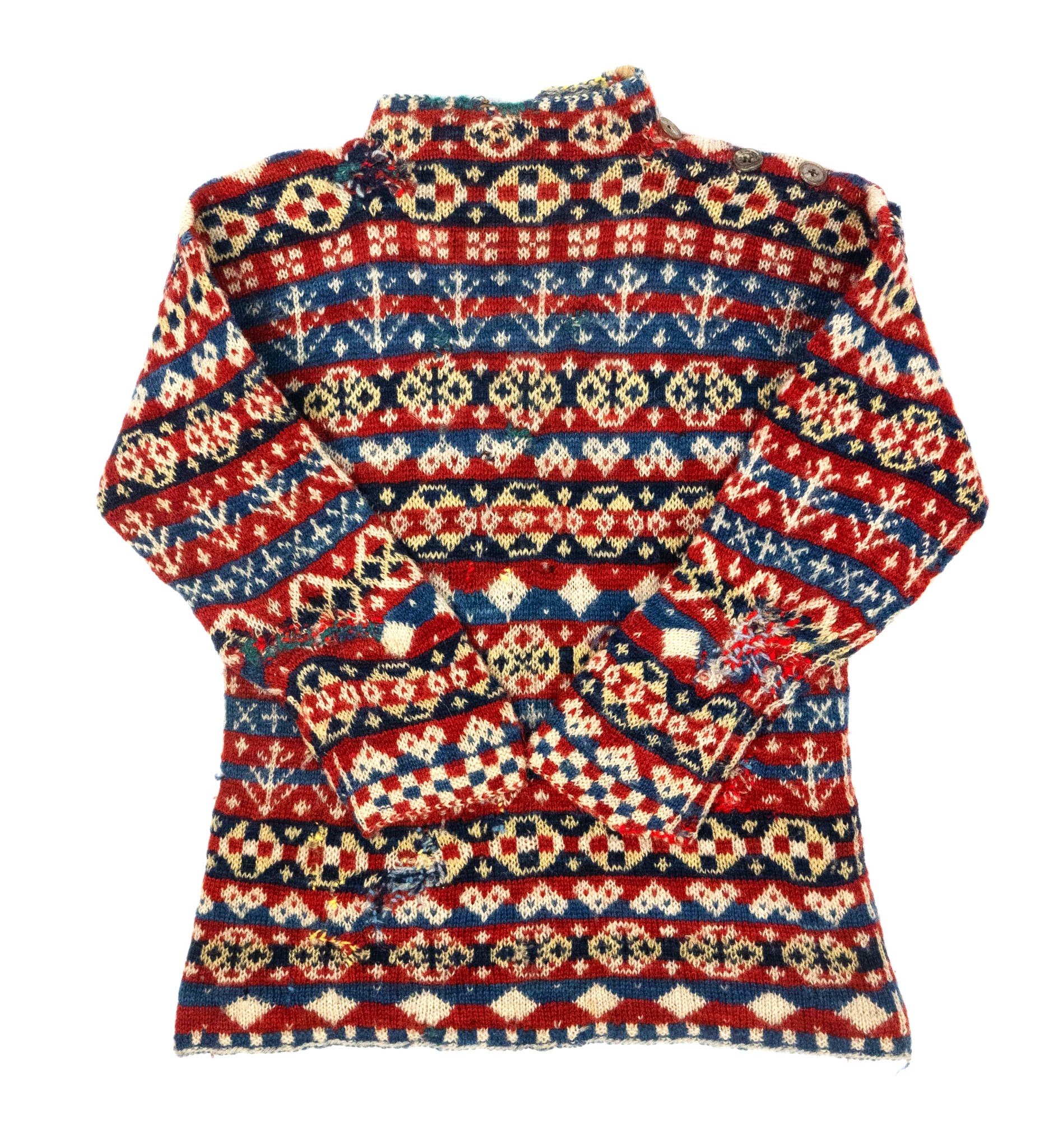
Some objects in Shetland Museum’s collection tell a more in-depth story than others. When a child’s pullover was donated in 1981, only a brief account of its history was recorded. The recent Shetland Times publication of 'A Shetland Boyhood: Memories of a Manse,1911-1922', by John B. Logan (1904-1987), has given us greater insight into the boy who wore it and his parents, who bought it for him. Recently the pullover inspired a Danish knitwear designer to create a similar pullover for her husband.
The Logan Family
In October 1911, seven year-old John Logan sailed from Leith to Lerwick with his parents and two younger siblings onboard one of the North of Scotland & Orkney & Shetland Steam Navigation Company steamers. His father, the Reverend Robert Logan, was a Home Mission Deputy preacher for the Church of Scotland. His new mission was to Shetland, to minister primarily to Scots who were itinerant workers or employed away from their homes on the Scottish mainland. The ministry was often focused on Scottish fisherman and gutter lasses, who swelled Shetland’s population considerably during the fishing season. Indeed, the Rev. Logan was preaching from the end of a Lerwick pier when he was heard by a Church representative, who approached him about a post vacancy.
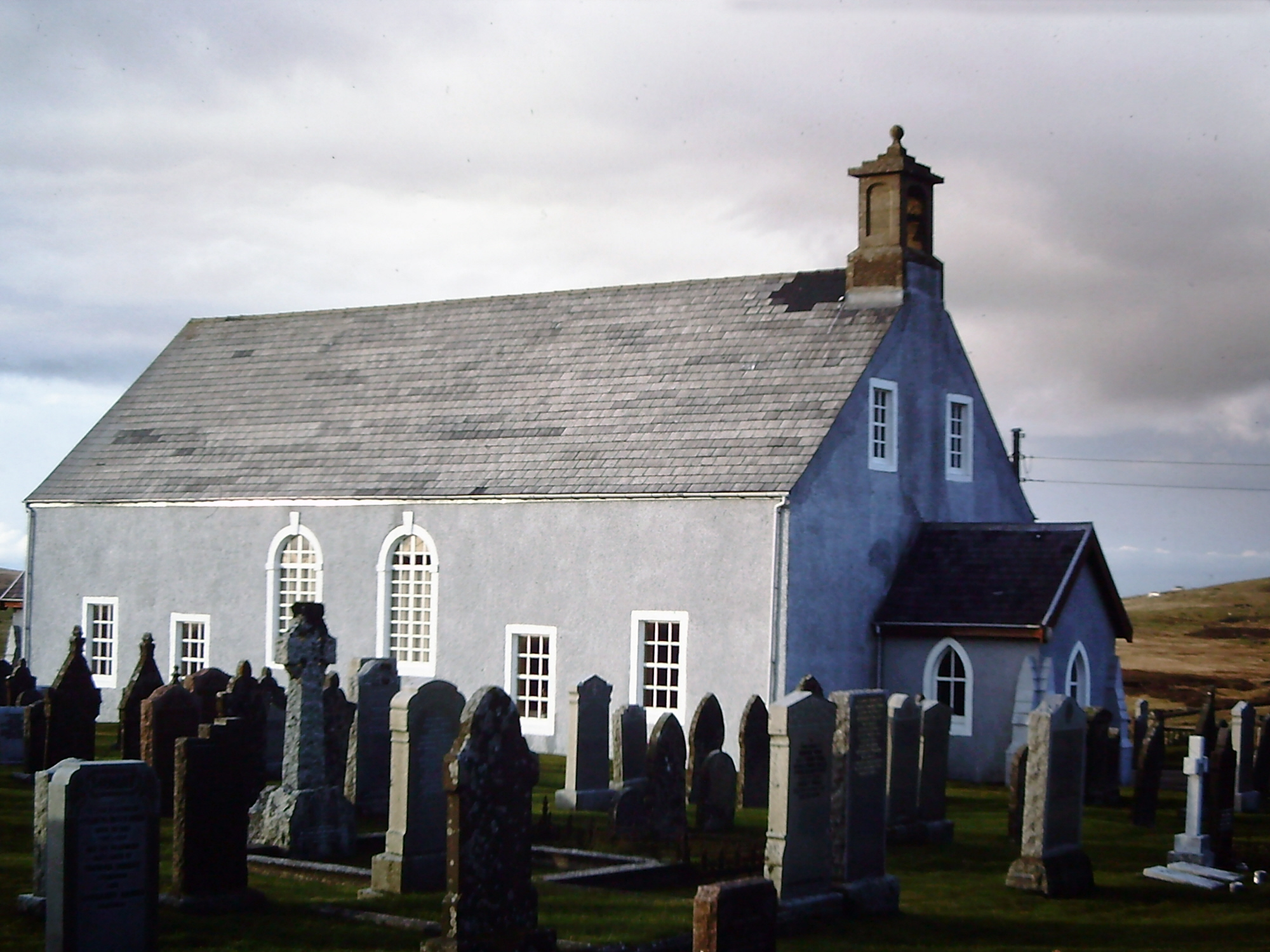
Photo above: Dunrossness Kirk
By the second week of October, Reverend Logan was inducted as pastor for the congregation of Dunrossness, Shetland’s most southerly parish. It was the first induction of a new minister in Dunrossness since 1865, the Reverend William Brand having served 46 years. The ceremony at the parish church at Boddam was followed by a dinner at the Spiggie Hotel. Once the family’s belongings had been brought from Lerwick to Dunrossness on the Columbine, they moved into the large Manse on the main road, north of the kirk. They would remain in Shetland until 1922, and Annie Logan would give birth to their fourth child Robert, in the Manse in October 1914.
School Days
A little further north of the Manse was the Boddam primary school where John and his sister Annie were enrolled. The school was segregated by gender, having two rooms and two play areas. John recalled rough play in the boy’s playground. A school photograph taken a year after the Logans moved to Shetland gives some indication of the social differences among the children. John is located in the back row, wearing a starched white collar and light suit. The only other child wearing similar clothing was the child of the United Free Church minister. They stand among boys wearing dark ganseys and jackets. These were crofting children, who helped on the croft and possibly at the fishing required of their male relatives. The Logan family had livestock and grew vegetables, but they also had servants, which few families in Dunrossness had.
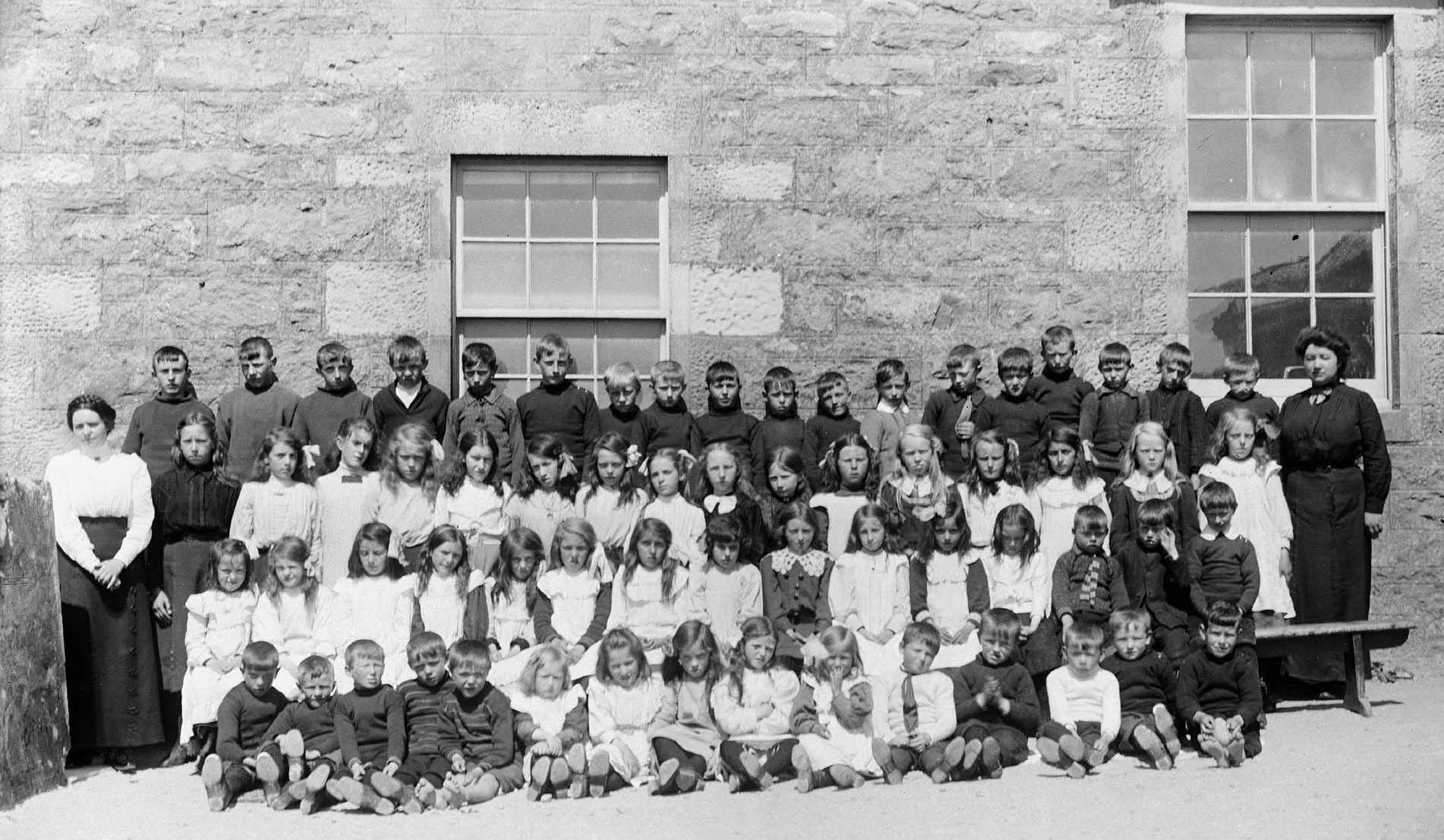
Photo above: Boddam Primary School, 1912. John Logan in back row, seventh boy from right, in light suit.
The Reverend’s sphere of pastoral care extended as far north as Bigton and as far south as Fair Isle. Neither Church of Scotland kirks in those locations had their own minister and Reverend Logan appears to have held services in Bigton at regular intervals, one or two Sundays every two months. He served on the Temperance and Social Work Committee and he held a Sunday School Group at the Manse with his wife and family.
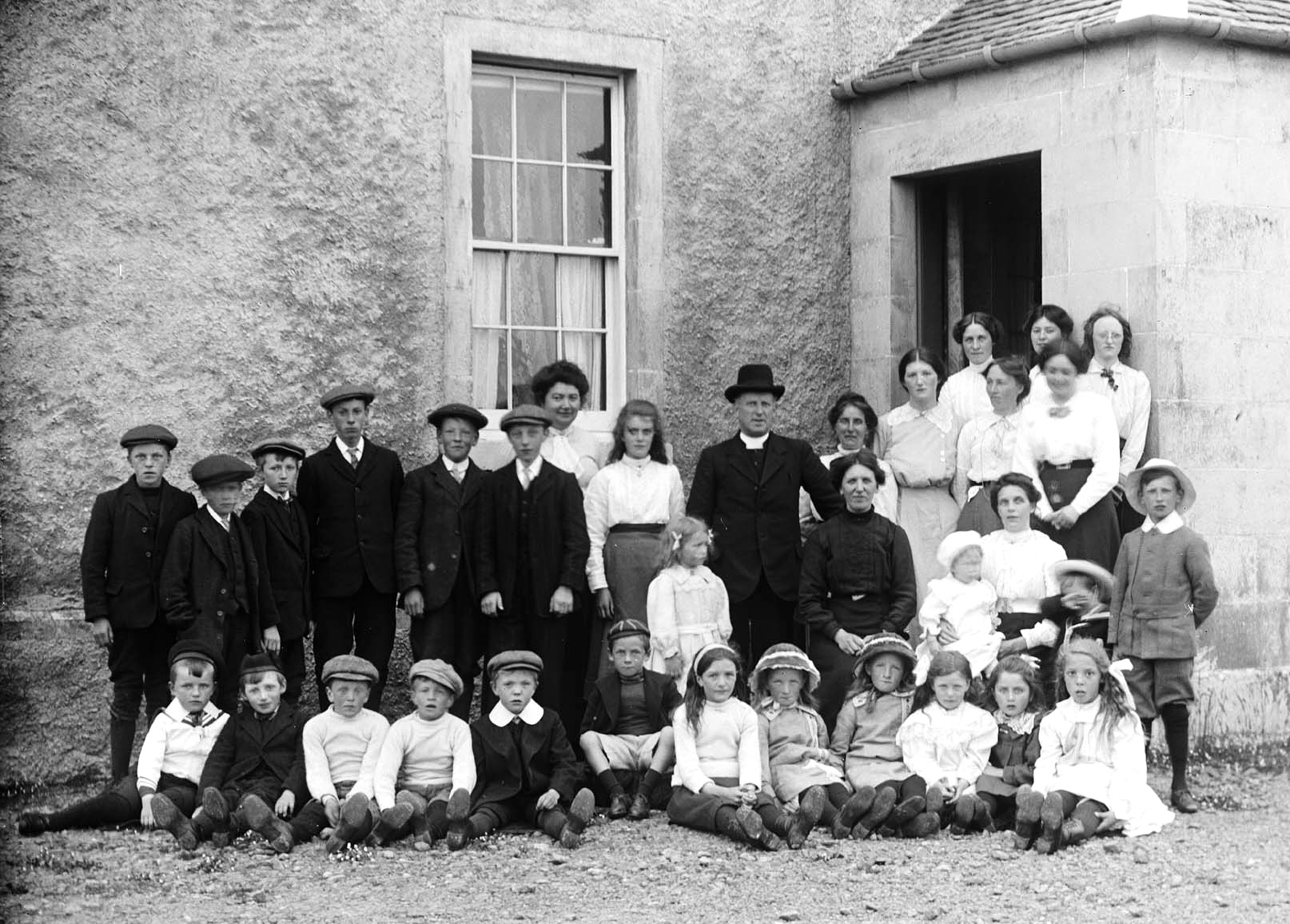
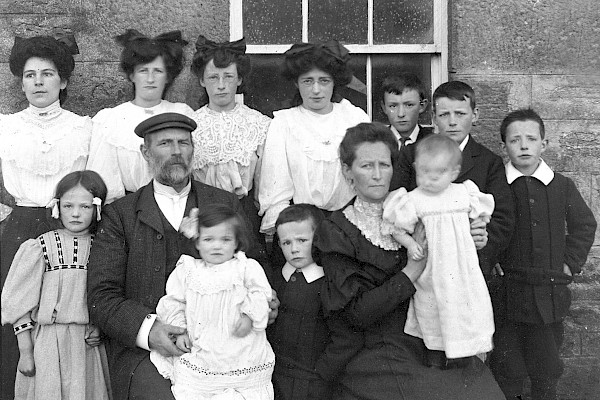
Photo above: Sunday School Group at the Manse, c1914. The Rev. Logan in black hat, his wife Annie in front of him with hands clasped, son John furthest right in white cap and tweed suit.
To Fair Isle
The situation in Fair Isle was quite different. Located 30 miles south of the southern tip of Shetland, the little island is surrounded by rough seas and high cliffs. A beach and harbour is situated at the northeast corner of the island. Due to the difficulties of sailing to Fair Isle, the Church of Scotland pastoral care for the island took place at best, once or twice a year. At the end of May 1912, Reverend Logan travelled to Fair isle to examine the progress of religious instruction in the school. The island’s population numbered about 140 individuals at the time.
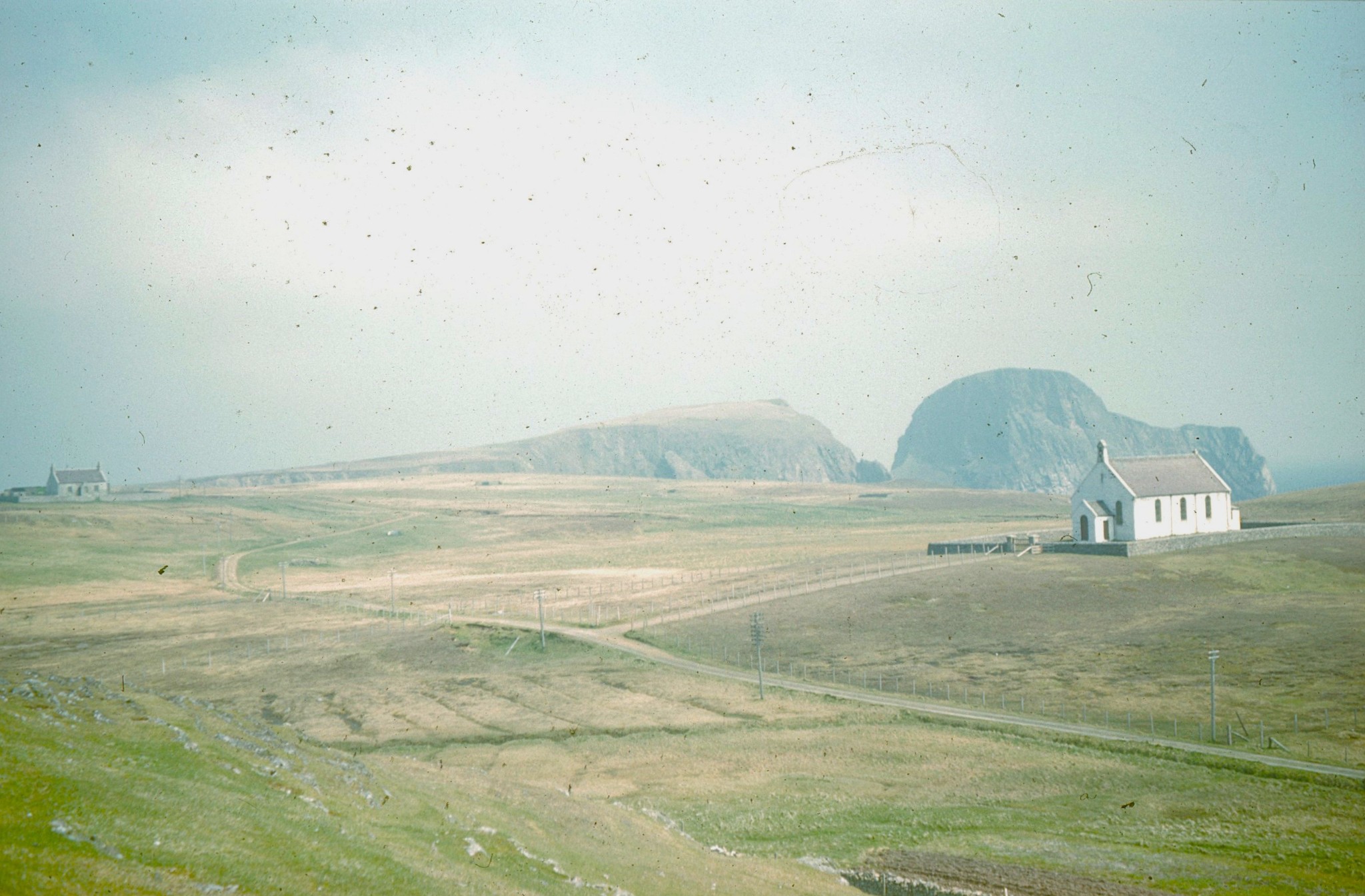
Photo above: Fair Isle Church of Scotland, right, the school, far left, and Sheep Rock looming behind.
The Original Pullover
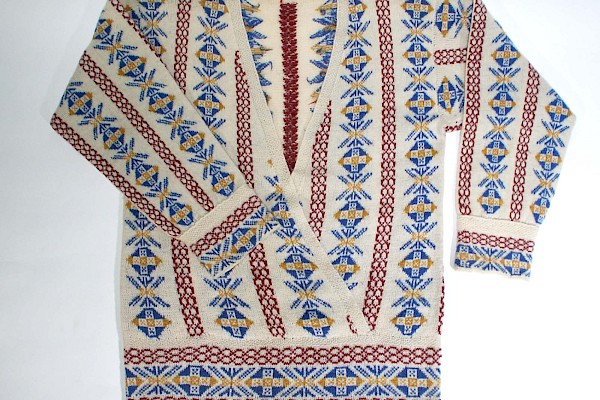
During a visit to Fair Isle in the summer of 1913, the Reverend and his wife Annie purchased the pullover for John from one of the island’s knitters. The garment is a good example of the type of traditional knitting done in Fair Isle for at least a century before, and prior to the global fashion boom in fair isle-style garments for men and women in the early 1920s. This was a critical time in knitwear making in Shetland, when the long-standing old ways were about to change in response to fashion market forces. Nevertheless, our records indicate that the jumper’s designs were widely copied in and around Dunrossness, as young John wore it in the parish.
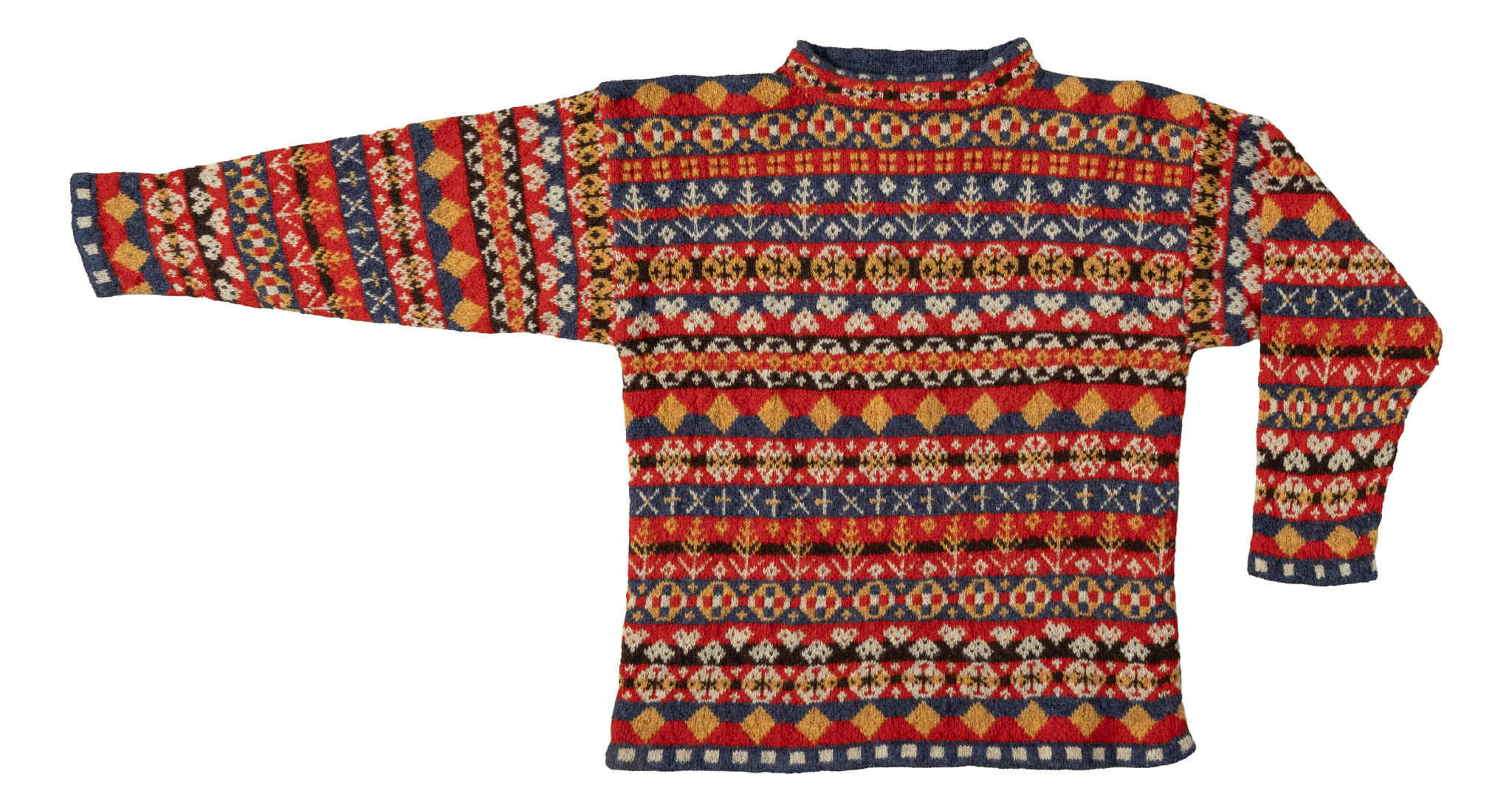
The pullover is made of white hand-spun wool, most likely from sheep born and raised on Fair Isle. The colours are somewhat typical of the earliest phase of the craft: red, dyed from madder or a mixture of madder and several local dye sources; very dark blue, a strong indigo dyebath that required dipping and oxidation numerous times; medium blue, from a weaker indigo dyebath; yellow, made from various native plants; and natural white. Despite signs of wear and repairs, the colours remain rich and true.
The tunic-shaped garment, with high neck and long sleeves, is similar to adult-sized pullovers made in Fair Isle and purchased for the 1902-1904 National Scottish Antarctic Expedition. The button placket at the right shoulder signifies the design was intended for a child. Like all knitwear from Fair Isle, the garment was knitted in the round from the bottom up, then knitted back and forth from the armpits to the shoulders. The sleeves were picked up around the armholes and knitted down. The patterns in the horizontal rows are common Fair Isle motifs – hearts, diamonds, trees, and petal-like squares and crosses. The OXO patterning is simplified, without using a true X between the O motifs.
What stands out in this garment are the two-colour cast off edges in red and white for the cuffs, and blue and white for the neck. This technique is not usually represented in Sheland colour-stranded design and is reminiscent of knitting from Scandinavia and the eastern Baltic, from where knit design on Fair Isle may have been partially influenced. The knitter has also integrated two vertical lines in white on the sides of the torso and sleeves, with two stitches between the white columns, giving the knitter a narrow, pattern-free space to shape the body and sleeves with increases and decreases.
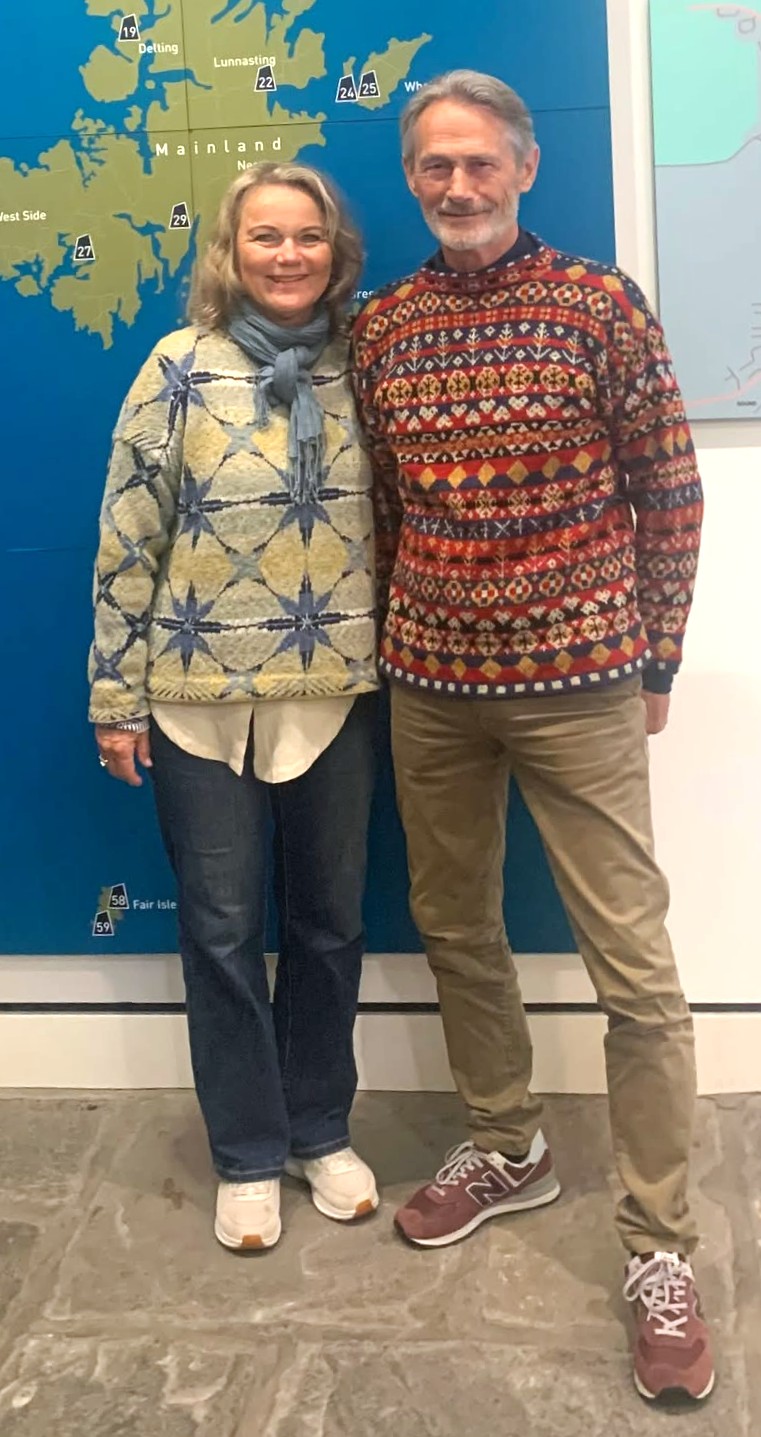
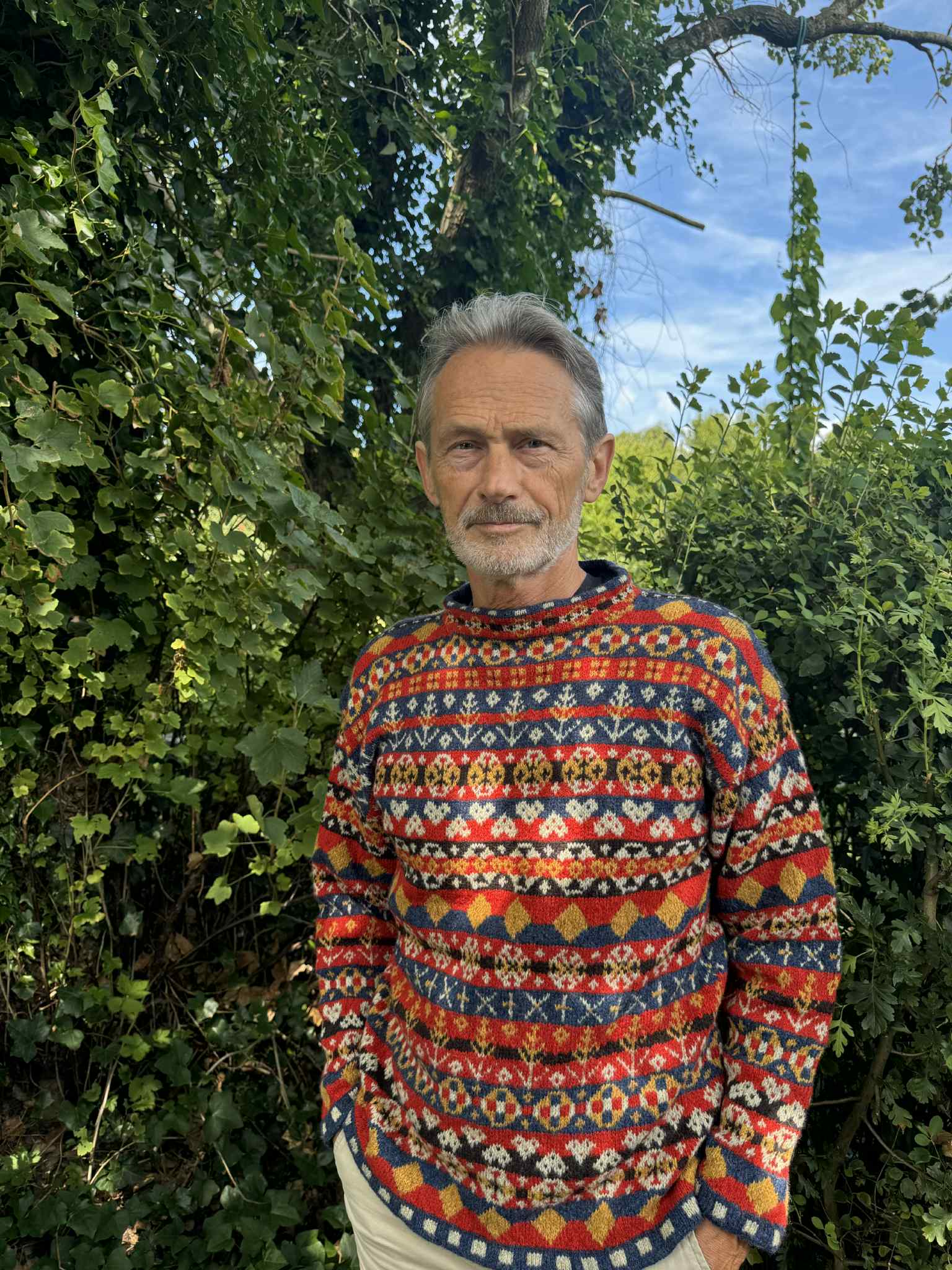
Among the many foreign visitors to Shetland this year was Christel Seyfarth and her husband. As a knitwear designer in Denmark, Christel was inspired by the little jumper in our permanent display to make a pullover for her husband. When he wore it into the Museum the moment was captured by our Visitor Services Assistant, Linda Nicolson.
A Shetland Boyhood: Memories of a Manse is available to buy from our heritage shop.